
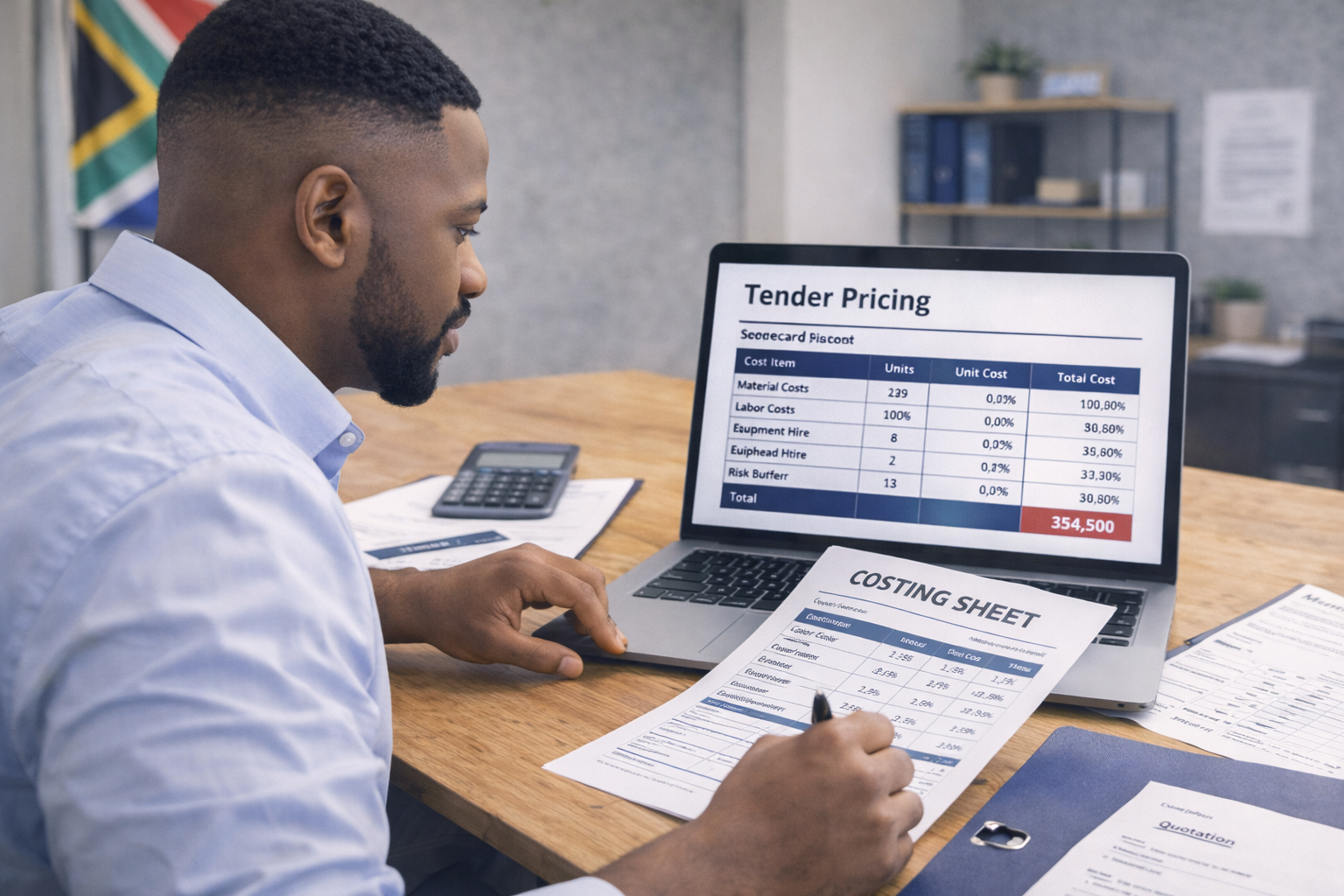
One of the most common reasons businesses lose tenders is pricing too high or too low. If you underprice, you risk losing money. If you overprice, you risk losing the bid to a competitor.
For Black South African entrepreneurs and SMEs, getting tender pricing right is about balancing competitiveness with profitability. In this guide, we’ll walk you through mark-ups, costing sheets, and risk buffers so you can submit a price that’s smart, compliant, and sustainable.
1. Why Tender Pricing Matters
Tender pricing is not just about being the cheapest—it’s about offering the best value while still making a profit.
Correct pricing:
- Increases your score in the 80/20 or 90/10 system
- Protects your cash flow during the project
- Helps you deliver quality work without losses
2. Step-by-Step Tender Pricing Process
Step 1: Understand the Scope
Read the tender document carefully:
- What exactly is required?
- How many units or how much work is involved?
- Are there special compliance costs (safety gear, insurance, licences)?
Step 2: Build Your Costing Sheet
A costing sheet is your detailed breakdown of all costs.
Typical costing sheet sections:
- Direct Costs – Materials, labour, equipment hire, transport
- Indirect Costs – Admin, utilities, office expenses
- Overheads – Company running costs allocated to the project
- Compliance Costs – COIDA, insurance, certifications
- Contingency (Risk Buffer) – Extra margin for unexpected issues
Step 3: Add Your Mark-Up
Your mark-up is your profit margin on top of total costs.
Example:
- Total cost: R500,000
- Mark-up: 15%
- Selling price: R575,000
Tip: Keep your mark-up reasonable—tenders are competitive.
Step 4: Include a Risk Buffer
A risk buffer protects you from:
- Price increases in materials
- Delays caused by weather, suppliers, or approvals
- Unexpected compliance expenses
In government tenders, keep risk buffers transparent in your internal costing, but ensure your final price is still competitive.
3. Tender Pricing Example
Scenario: Supplying 1,000 school desks to a provincial education department.
Cost Item | Unit Cost (R) | Qty | Total (R) |
|---|---|---|---|
Materials | 550 | 1000 | 550,000 |
Labour | 100 | 1000 | 100,000 |
Transport | 25 | 1000 | 25,000 |
Overheads (10%) | Cell | Cell | 67,500 |
Compliance & Insurance | Cell | Cell | 12,500 |
Subtotal | Cell | Cell | 755,000 |
Risk Buffer (5%) | Cell | Cell | 37,750 |
Total Cost | Cell | Cell | 792,750 |
Mark-up (12%) | Cell | Cell | 95,130 |
Tender Price | Cell | Cell | 887,880 |
4. Common Tender Pricing Mistakes to Avoid
- Guessing costs instead of calculating
- Forgetting indirect expenses
- Adding too much mark-up and losing on price points
- Forgetting to check competitor pricing trends
- Not including a risk buffer and suffering losses
5. How etenderportal.co.za Can Help
When you find tenders on etenderportal.co.za:
- You can filter by sector to see past tender values and pricing trends
- Get tender documents early to allow more time for accurate costing
- Access guides and checklists to avoid common pricing errors
6. Final Tips
- Always prepare your costing sheet before deciding on your final price
- Balance competitiveness with sustainability
- Review similar past tenders for benchmark pricing
- Include a risk buffer to protect your profit
- Use tender portals like etenderportal.co.za to stay ahead of deadlines
Government tenders are one of the most powerful ways to grow your business — if you’re prepared and compliant.
Smart pricing is the key to winning contracts and keeping them profitable.